Skip to content

SHOP ONLINE or CALL 📞 1300 246 406 | MON - FRI 7AM - 5PM

SHOP ONLINE or CALL 📞 1300 246 406 | MON - FRI 7AM - 5PM

Power Trowels

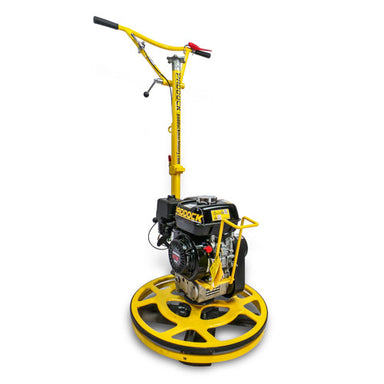
Scintex is proud to offer Paddock construction equipment to the Australian market. Our range of concrete power trowels include the Honda edging trowel which comes with GX160 4 stroke Honda commercial engine and is great for hire and rental businesses as well as trade professionals. 

Ideal for edging jobs where tight spaces are an issue these edging trowels are designed to fit through doorways for easy access and the high quality, heavy duty construction ensures a professional finish every time.

We also stock the Honda petrol concrete trowel available is 3 options including the 900mm (36"), the 1050mm (42") and the 1150mm (46") all standard with the Honda GX270 4 stroke Honda commercial engine delivering a massive 8.5 HP.

Perfect for delivering a professional finish on concrete slabs these trowels are exceptional value for money and backed by quality Honda engines.

Additionally we stock concrete trowel blades and float pans from 36" to 47" and designed to fit most power trowels on the market.

We ship fast Australia wide and provide local product advice and support.

Choose the machine by slab area, access and the stage of finishing. A smaller edging trowel is easier to control near walls, columns and doorways, while larger walk-behind trowels cover open slabs faster and reduce finishing time. Also consider machine weight, blade diameter, transport requirements and whether the site has restricted access. For larger pours, contractors often use an edging machine around the perimeter and a wider trowel across the main slab.
Begin only after the concrete has stiffened enough to support the machine and operator without excessive sinking or deep tracking. The surface should still be workable, but bleed water must have evaporated. Starting too early can tear, ripple or weaken the surface; starting too late makes it difficult to close and smooth. Timing varies with mix design, slab thickness, temperature, wind and humidity, so assess the slab rather than relying on a fixed waiting time.
Float pans are generally used during the early pass to flatten ridges, embed aggregate and open the surface evenly. Combination blades can perform both floating and finishing on many jobs, while dedicated finishing blades are used later at increasing pitch to produce a denser, smoother finish. Blade choice depends on the machine, slab condition and required finish. Always fit compatible components evenly and replace damaged or unevenly worn blades as a matched set.
Common causes include starting at the wrong time, excessive blade pitch, worn or mismatched blades, concrete buildup beneath the machine, moving too slowly in one area or repeatedly crossing the slab in the same direction. Bent arms, loose fasteners or an out-of-balance rotor can also cause vibration and patterning. Clean and inspect the machine before use, keep passes consistent and change direction between finishing passes.
Clean concrete residue from the blades, guard ring and underside immediately after use, before it hardens. Inspect blades, arms, spider assembly, belt or clutch, gearbox, throttle controls and safety switch regularly. Check engine oil and service the engine to its schedule, grease specified points and tighten loose fasteners. Remove the machine from service if it develops excessive vibration, damaged guards, poor control response or oil leakage.