
Skip to content

💥BLACK FRIDAY SALE ON NOW!! USE CODE: BLACKFRIDAY💥       SHOP ONLINE or CALL 📞 1300 246 406   | MON - FRI 7AM - 5PM

💥BLACK FRIDAY SALE ON NOW!! USE CODE: BLACKFRIDAY💥       SHOP ONLINE or CALL 📞 1300 246 406   | MON - FRI 7AM - 5PM

Surface Screeds

A straightedge mainly strikes excess concrete from the surface. A vibrating surface screed also transmits vibration into the top layer of the slab, helping the mix settle around aggregate, reducing small voids and bringing paste to the surface for finishing. It can improve productivity and consistency on larger pours, but it does not replace correct placement, internal vibration where required, or final finishing. Excessive vibration can drive coarse aggregate down and bring too much water and cement paste upward, so the machine should move steadily without repeatedly working the same area.
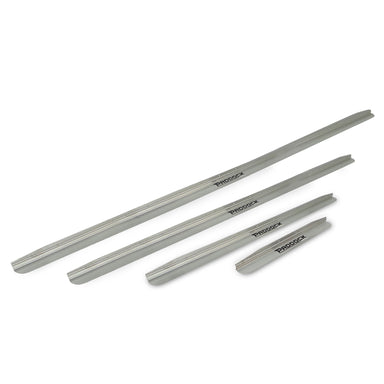
Select a blade that can bridge the formwork or screed rails with enough overlap at both ends to remain supported throughout the pass. A longer blade covers more area, but it is heavier, harder to control and more likely to deflect if poorly supported. Narrow paths and small slabs are usually easier with a shorter beam, while wide commercial pours may justify a longer unit and additional operators. Also consider access, transport and whether the concrete can be placed evenly ahead of the screed. The longest available blade is not automatically the most productive choice.
The concrete should be workable enough to settle under vibration but stiff enough to hold level after the blade passes. Very dry concrete can cause the screed to bounce, drag aggregate and leave low areas. An overly wet mix may roll in front of the blade, segregate and produce a weak, laitance-rich surface. The correct slump depends on the mix design, reinforcement, slab thickness, weather and engineering specification, so water should not be added simply to make screeding easier. Good placement and maintaining a consistent head of concrete in front of the beam are just as important as slump.
Common causes include an uneven concrete head, moving too quickly, allowing one end of the blade to run ahead, damaged or dirty screed blades, poorly set rails and repeatedly stopping in the same location. Low spots can also develop when the operator tries to pull concrete from too far away rather than placing it close to final level. Check that the beam is straight, the mounts are secure and the vibration is even. Work at a steady walking pace with both ends supported, and have workers distribute concrete ahead of the screed instead of relying on the machine to move large volumes.
Wash concrete from the blade, mounts and guards immediately after use, before it cures. Hardened build-up changes the blade profile, adds weight and can create vibration or balance problems. Avoid directing high-pressure water into the engine, bearings, electrical components or control assemblies. Check fasteners, anti-vibration mounts and the throttle mechanism while the machine is clean, then follow the engine manufacturer's instructions for fuel and oil storage. Store the beam straight and fully supported so it cannot bend. A lightly damaged or distorted blade can create visible defects across every slab it touches.