Skip to content

SHOP ONLINE or CALL 📞 1300 246 406 | MON - FRI 7AM - 5PM

SHOP ONLINE or CALL 📞 1300 246 406 | MON - FRI 7AM - 5PM

Tank Spares

We stock a range of spare parts to service your petrol, diesel and Adblue portable storage tanks.
Start with the tank brand, model, capacity and any moulded identification or original order details. Then measure the existing opening, thread type, hose size and mounting arrangement. Lids, breathers and outlets that look alike can use different thread pitches or sealing systems, so appearance alone is unreliable. Clear photos of the tank, failed part and surrounding moulded features are useful when seeking assistance. If the original fitting has damaged the tank opening, mention this as well, because replacing the same part may not correct a distorted thread or enlarged hole.
A tank must admit air as liquid is pumped out and release air as it is filled. A blocked or undersized breather can make the tank collapse inward, reduce pump flow, cause a transfer pump to lose prime or force liquid from the cap and fittings during filling. The vent should be sized for the fill and withdrawal rate, positioned to minimise splash entry and protected from dust, insects and water where required. Fuel and chemical tanks may need specialised vents, rollover protection or emissions controls, so a simple open breather is not suitable for every application.
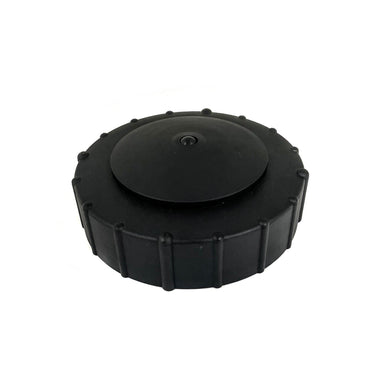
Replace a lid when the thread no longer tightens securely, the seal is hard, cracked or missing, the vent cannot be cleaned, or the cap has warped from impact, heat or chemical exposure. A damaged lid allows dust and rain into the tank and may let liquid splash out during transport. Before ordering, check the neck diameter, thread style and whether the cap is vented or sealed. Do not substitute a sealed cap for a vented system unless a separate breather is installed and correctly sized.
Not always. If the gasket has shifted, the flange is distorted or the tank wall has softened, further tightening can make the leak worse and may crack the fitting or pull it through the tank. First drain the liquid below the outlet and remove load from connected hoses or pumps. Inspect the fitting, gasket and tank surface for damage and contamination. Replace hardened seals and cracked components, then retighten evenly to the recommended level. If the tank opening is split or badly enlarged, a larger repair fitting or professional tank repair may be required.
For equipment that cannot afford downtime, keep the parts most likely to be lost, blocked or damaged: lid seals, caps, breathers, outlet gaskets, hose tails, drain valves, clamps and any model-specific suction strainers. Mobile spray and fuel tanks also benefit from spare hoses, isolation valves and pump fuses where applicable. Store elastomer seals away from sunlight, fuel vapour and chemicals, and label them by tank or machine model. A small, correctly identified spare kit is more useful than a box of generic fittings that may have the wrong thread or material.