

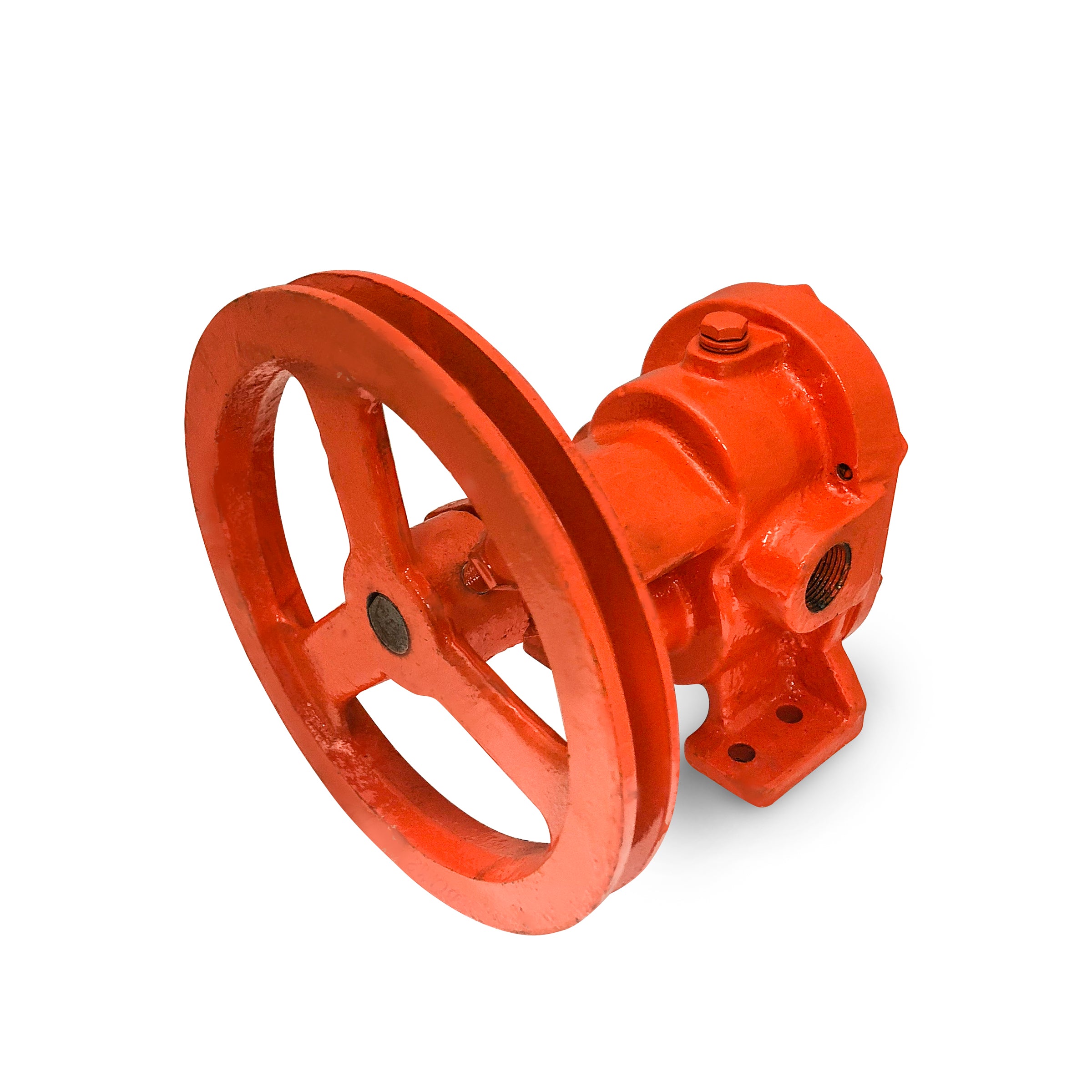
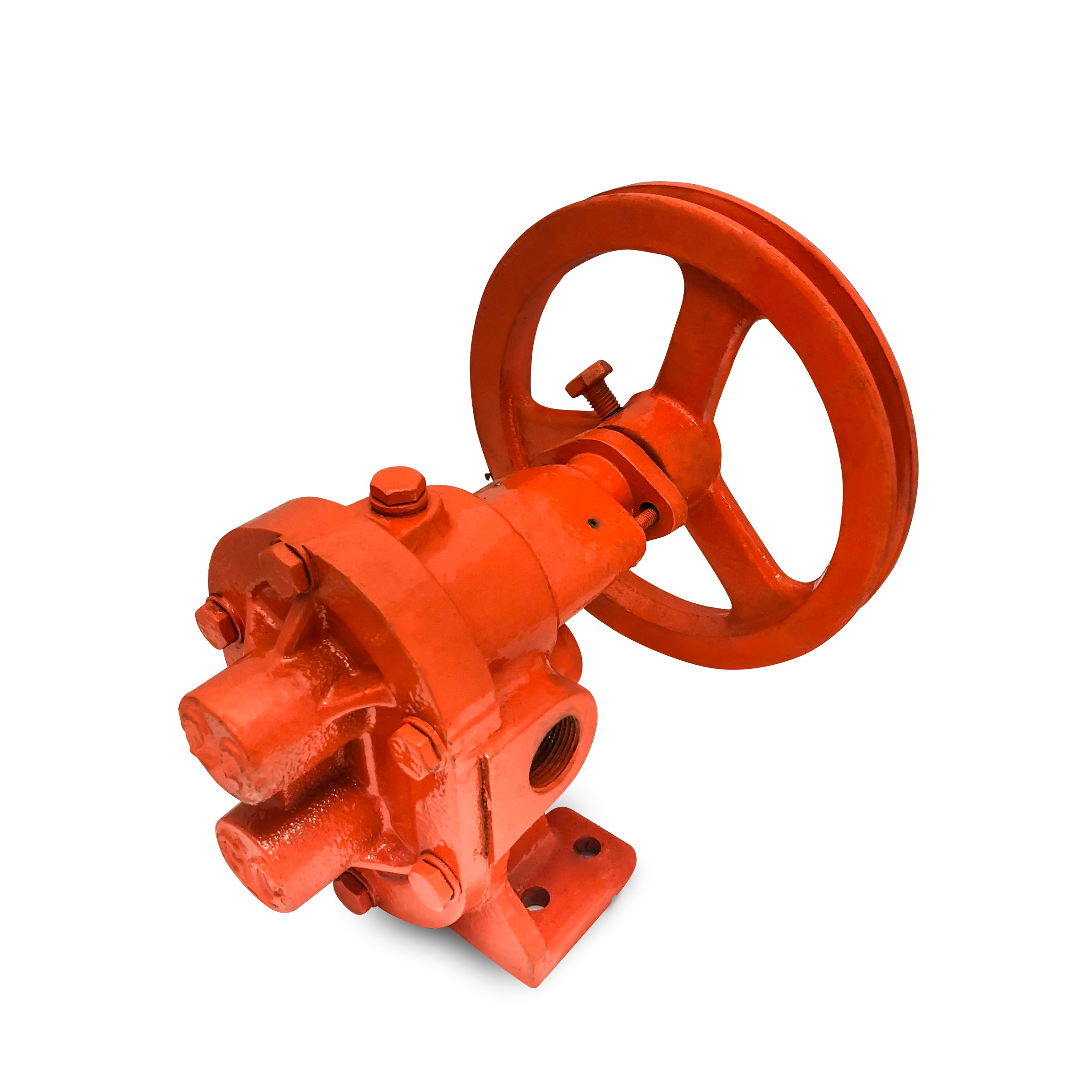
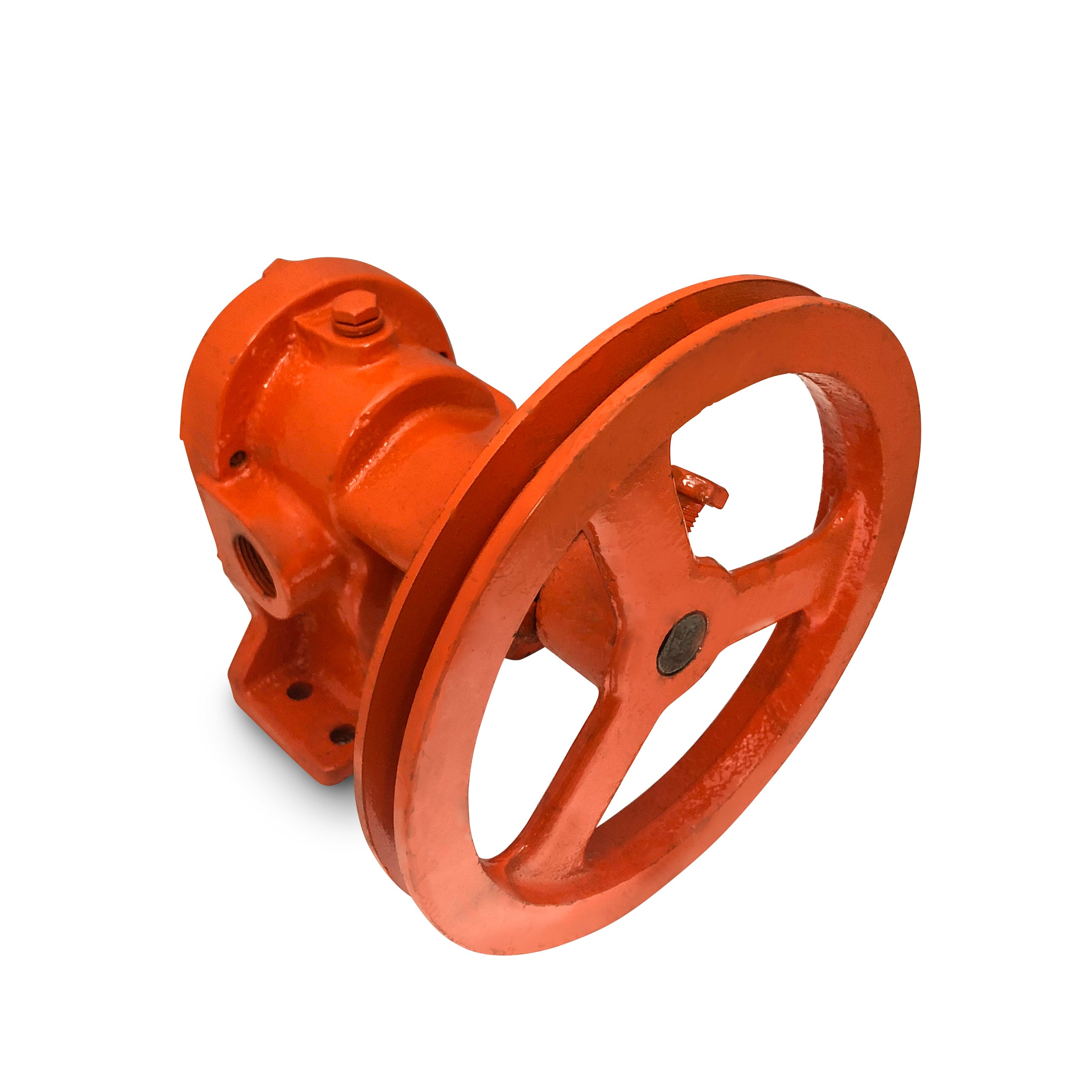
Pulley Drive Gear Pump
Description
The Paddock Pulley Drive Gear Pump range is designed for liquid transfer applications where the pump is driven by an external electric motor, engine, pulley or chain drive system. These positive displacement gear pumps are especially well suited to clean, non-abrasive fluids including oils, diesel, kerosene, fertilisers, molasses and other higher-viscosity liquids.
Available in six sizes with flow rates up to approximately 440 L/min at 400rpm, these pumps are ideal for industrial processing, pressure boosting, lubrication systems, bulk liquid transfer and specialised agricultural applications.
Please contact Scintex before ordering so current availability and pricing can be confirmed.
Pulley Drive Positive Displacement Gear Pumps
- Six pump sizes available
- Flow rates up to approximately 440 L/min
- Maximum head up to 30m
- Suitable for clean, non-abrasive liquids
- Ideal for medium to high viscosity fluids
- Can be driven by electric motors or engines
- Nominal operating speed of 400rpm
- Recommended maximum speed of 600rpm
- Reduced speeds recommended for high-viscosity fluids
- Reversible operation allows flow direction to be changed
- Self-lubricating internal bearing design using pumped fluid
Typical Pump Applications
These positive displacement gear pumps are suited to low and medium pressure liquid transfer applications where a robust external-drive pump is required.
Common applications include:
- Tallow
- Transformer oils
- Heating oils
- Printing inks
- Bitumen emulsions
- Molasses
- Jelly and viscous food-type products
- Liquid fertilisers
- Diesel
- Kerosene
- Lubricating liquids
- Factory process pumping
- Pressure boosting
- Bulk liquid transfer
- Lubrication systems
Important: Fluids must be clean and free from suspended abrasive particles. Abrasive solids can rapidly damage the pump gears and internal bearing surfaces.
Pump Size & Performance Guide
| Model | Inlet / Outlet | Suction Lift | Max. Head | Max. Flow Rate | Shaft |
|---|---|---|---|---|---|
| SPGC13 | 1/2" | 4.5m | 30m | 15 L/min | 14mm with flat |
| SPGC20 | 3/4" | 4.5m | 30m | 35 L/min | 20mm with flat |
| SPGC25 | 1" | 4.5m | 30m | 43 L/min | 20mm with flat |
| SPGC40 | 1-1/2" | 4.5m | 30m | 100 L/min | 24mm shaft / 8mm key |
| SPGC50 | 2" | 4.5m | 30m | 209 L/min | 24mm shaft / 8mm key |
| SPGC80 | 3" | 4.5m | 30m | 440 L/min | 31mm shaft / 10mm key |
Flow Rate Note: Flow figures are based on operation at approximately 400rpm.
Performance Note: Pump sizing and drive power requirements depend heavily on fluid viscosity. Higher-viscosity liquids require more torque and therefore a larger drive motor or engine.
As a guide, when pumping molasses, approximately three times the drive horsepower / kW may be required compared with clean water service.
General Performance Data
- Flow rates up to approximately 27m³/hr
- Maximum head up to 30m
- Maximum fluid temperature: +60°C
- Maximum ambient temperature: +60°C
- Maximum allowable casing pressure: 6 bar
- Nominal rotational speed: 400rpm
- Recommended maximum rotational speed: 600rpm
- Recommended speed for high-viscosity liquids such as molasses: approximately 200rpm
- Six pump sizes available
- Pumps can operate in reverse to change fluid direction
Reversible Pump Operation
These gear pumps can operate in either rotational direction, allowing the direction of fluid transfer to be reversed.
Flow direction can be changed by either:
- Reversing the direction of the drive motor or engine where practical
- Reconfiguring the suction and discharge pipework to suit the required flow direction
This feature makes the pumps useful in systems where fluid may need to be transferred both into and out of tanks or process vessels.
Lubrication & Internal Design
The pump's blind plain bearings are lubricated by the liquid being pumped. The stuffing box incorporates gland packing which also functions as a grease-lubricated bearing area.
Do not operate the pump dry. Because the pumped liquid provides lubrication to internal surfaces, dry running can cause rapid wear and damage.
Pulley Drive Installation
The pump should be securely bolted to a suitable mounting surface before operation.
The gear pump can be installed in a range of orientations, provided the suction and discharge arrangement is correctly configured and the pump rotates in the intended direction.
Where V-belts or chain drives are used:
- Ensure the pump and drive pulleys are correctly aligned
- Set the correct belt or chain tension
- Ensure rotating components are appropriately guarded
- Confirm the selected pulley ratio produces the required pump speed
Priming & Start-Up
Always prime the pump with the liquid to be transferred before starting.
Start with the discharge fully open before gradually throttling to the required operating pressure.
If the pump may experience a closed discharge or dead-head condition, a suitable pressure relief or bypass valve must be installed and set to an appropriate pressure.
Special Requirements for Molasses
Molasses places significantly higher loads on pumps and pipework due to its high viscosity.
For molasses applications:
- Operate the pump at approximately 200rpm where practical
- Allow substantially more drive power than required for water
- Use inlet and discharge pipework with a minimum diameter approximately three times the pump port size where possible
- Replace the standard graphite gland packing with suitable Teflon gland packing
- Flush the pump thoroughly with hot water after use
Cleaning after molasses service is particularly important. Residual molasses can harden inside the pump and may cause the gears to seize before the next start.
Important Operating Notes
- Use only with clean, non-abrasive liquids.
- Do not operate the pump dry.
- Use a suitable relief or bypass valve where closed-head operation is possible.
- Confirm drive power is adequate for the viscosity of the liquid.
- Keep operating speed within the recommended range.
- Ensure belt or chain drive components are correctly aligned and guarded.
- Confirm material compatibility before pumping chemicals or specialised fluids.