

Trolltek™ DC-DC LiFePO4 Battery Chargers – 12V, 18V, 24V & 36V
Description
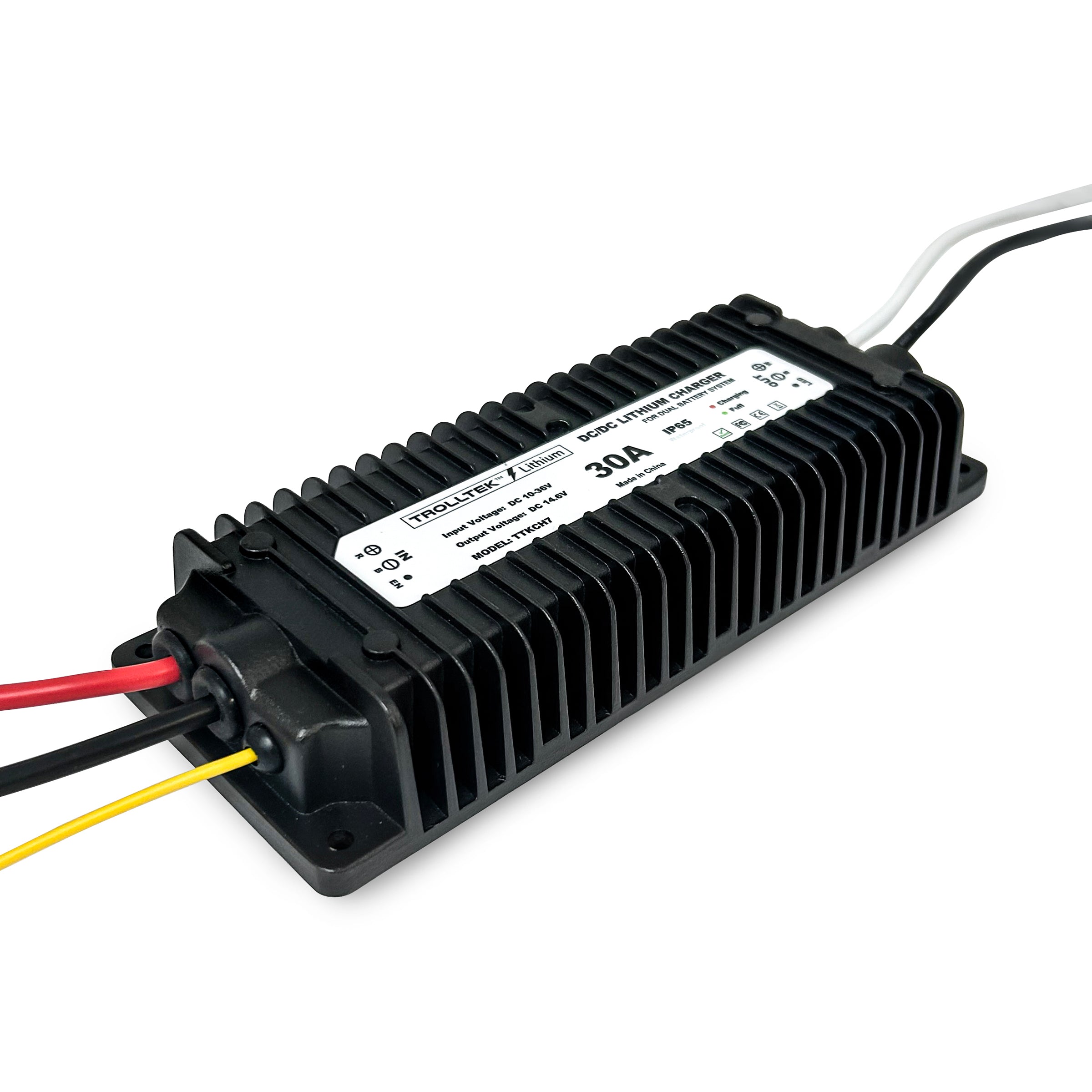
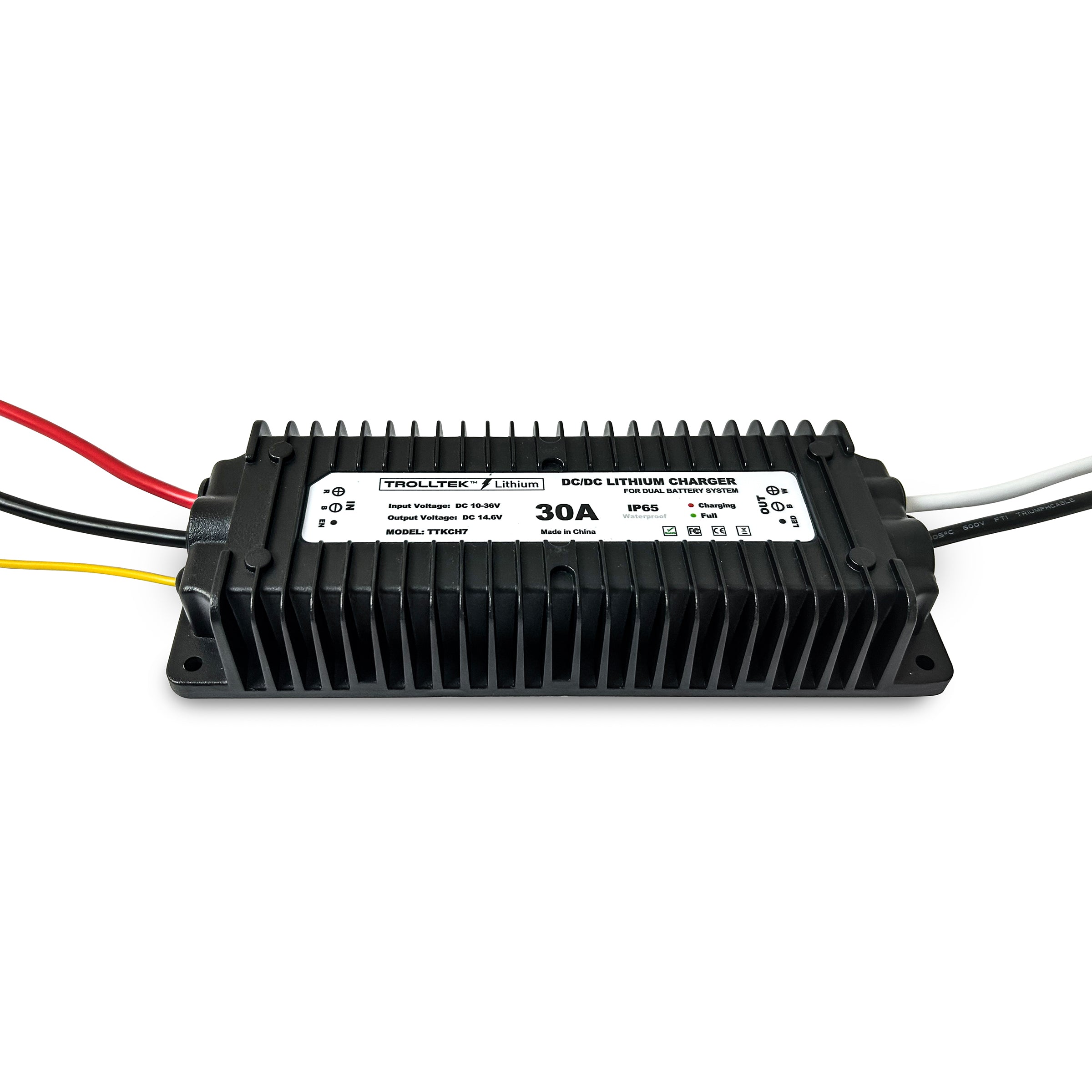
The Trolltek™ DC-DC LiFePO4 Battery Charger range is designed to charge lithium battery systems from a DC power source. With a wide 10-36V DC input, the range includes dedicated chargers for 12V, 18V, 24V and 36V lithium battery systems.
Ideal for marine, 4WD and mobile installations, these chargers allow lithium batteries to be charged from a suitable starting battery, alternator charging system or other compatible DC supply.
Trolltek™ DC-DC LiFePO4 Battery Chargers
Trolltek™ DC-DC chargers are configured for lithium battery charging, with dedicated output voltages for the corresponding Trolltek™ battery systems.
They may also be suitable for other compatible lithium batteries where the battery manufacturer's specified charging voltage and maximum charge current match the selected charger output.
Key Features
- Designed for LiFePO4 lithium battery charging
- Wide 10-36V DC input range
- 12V, 18V, 24V and 36V output models available
- 438W rated power
- Ignition / activation trigger input
- Over-voltage protection
- Over-temperature protection
- Over-current protection
- Short-circuit protection
- 92-96% efficiency
- IP65 rated enclosure
- Suitable for marine, 4WD and mobile battery systems
Available Charger Models
| Battery System | Charger Output |
|---|---|
| 12V | 14.6V DC / 30A |
| 18V | 21.6V DC / 9A |
| 24V | 29.2V DC / 15A |
| 36V | 43.8V DC / 10A |
Installation & Trigger Wire
Connect a suitable DC power source to the charger input and the lithium battery to the charger output. The selected charger must match the charging requirements of the lithium battery system.
The charger includes a trigger wire which accepts a 10-36V DC activation signal. This allows charger operation to be controlled by an ignition, engine-run or other suitable switching signal.
Where switched activation is not required, the trigger wire can be connected to the positive input supply so the charger is activated whenever input power is available.
Starting Battery & Alternator Considerations
When the charger is powered from a vehicle or boat starting battery, the available charging-system capacity must be considered. At full output the DC-DC charger can place a significant load on the source battery and charging system.
The DC-DC charger does not monitor the starting battery voltage. If permanently activated, it may continue drawing power when the alternator or engine charging system cannot provide sufficient output, potentially discharging the starting battery.
Using the trigger input with an appropriate engine-run or ignition signal can help control when the charger operates.
Optional Programmable Voltage Sensing Relay
For installations requiring automatic control based on source-battery voltage, the Trolltek™ Programmable Voltage Sensing Relay (PVSR) can be incorporated into the system.
The PVSR can be configured to enable the DC-DC charger when the starting battery reaches a selected voltage and disable it when voltage falls below a programmed level. This can help manage charging-system load and reduce the risk of excessive starting-battery discharge.
Installation Resources
View Trolling Motor Configuration Guide
Specifications
| Specification | Details |
|---|---|
| Model Series | TTKCH7 / TTKCH8 / TTKCH9 / TTKCH18 |
| Rated Power | 438W |
| Input Voltage | 10-36V DC |
| 12V Model Output | 14.6V DC / 30A |
| 18V Model Output | 21.6V DC / 9A |
| 24V Model Output | 29.2V DC / 15A |
| 36V Model Output | 43.8V DC / 10A |
| Trigger Input | 10-36V DC |
| Over-Voltage Protection | Included |
| Over-Temperature Protection | Included |
| Over-Current Protection | Included |
| Short-Circuit Protection | Included |
| Efficiency | 92-96% |
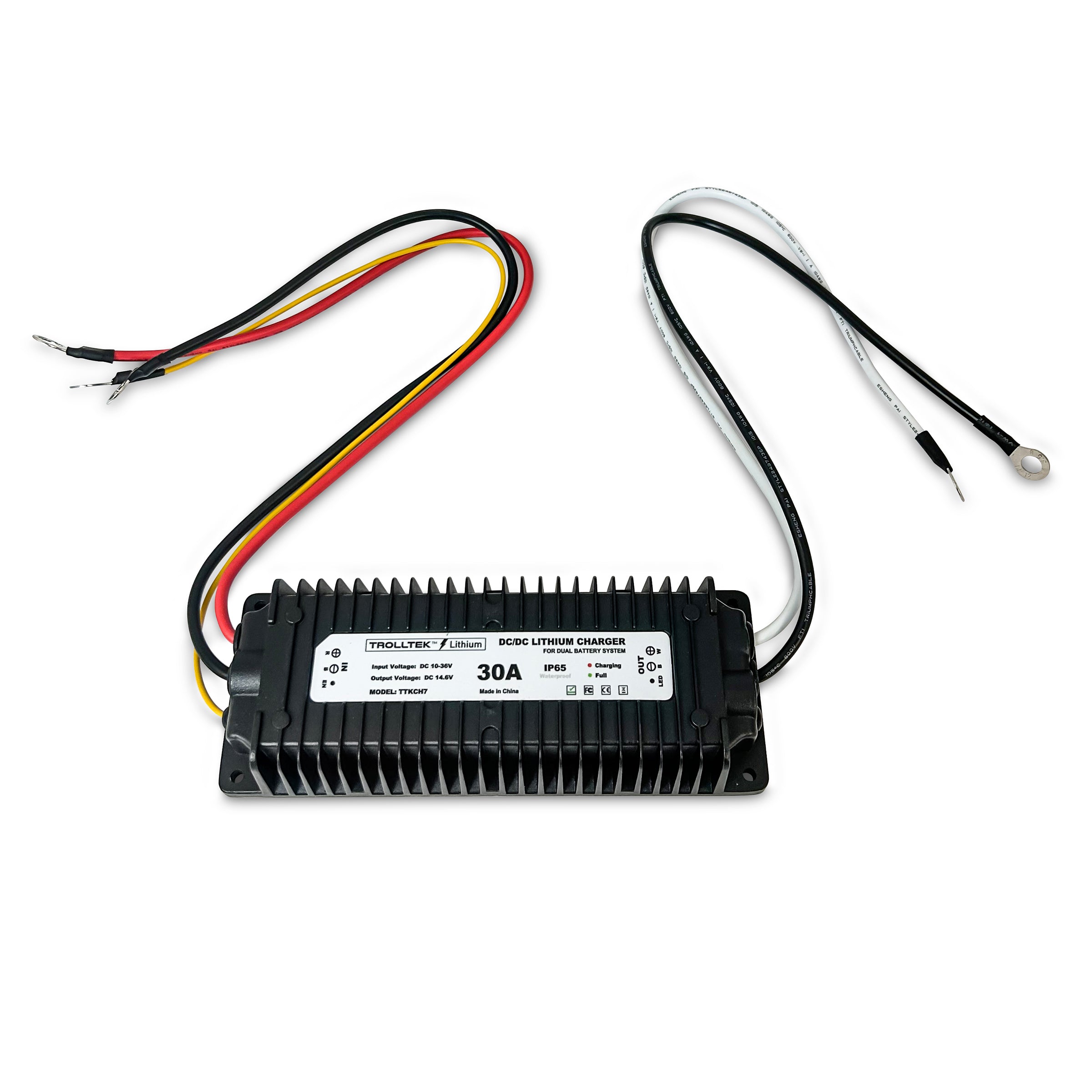
| Cable Length | 0.45m |
| Input / Output Connections | 10mm / 8mm ring terminals |
| Recommended Input Fuse / Breaker | 50A minimum |
| IP Rating | IP65 |
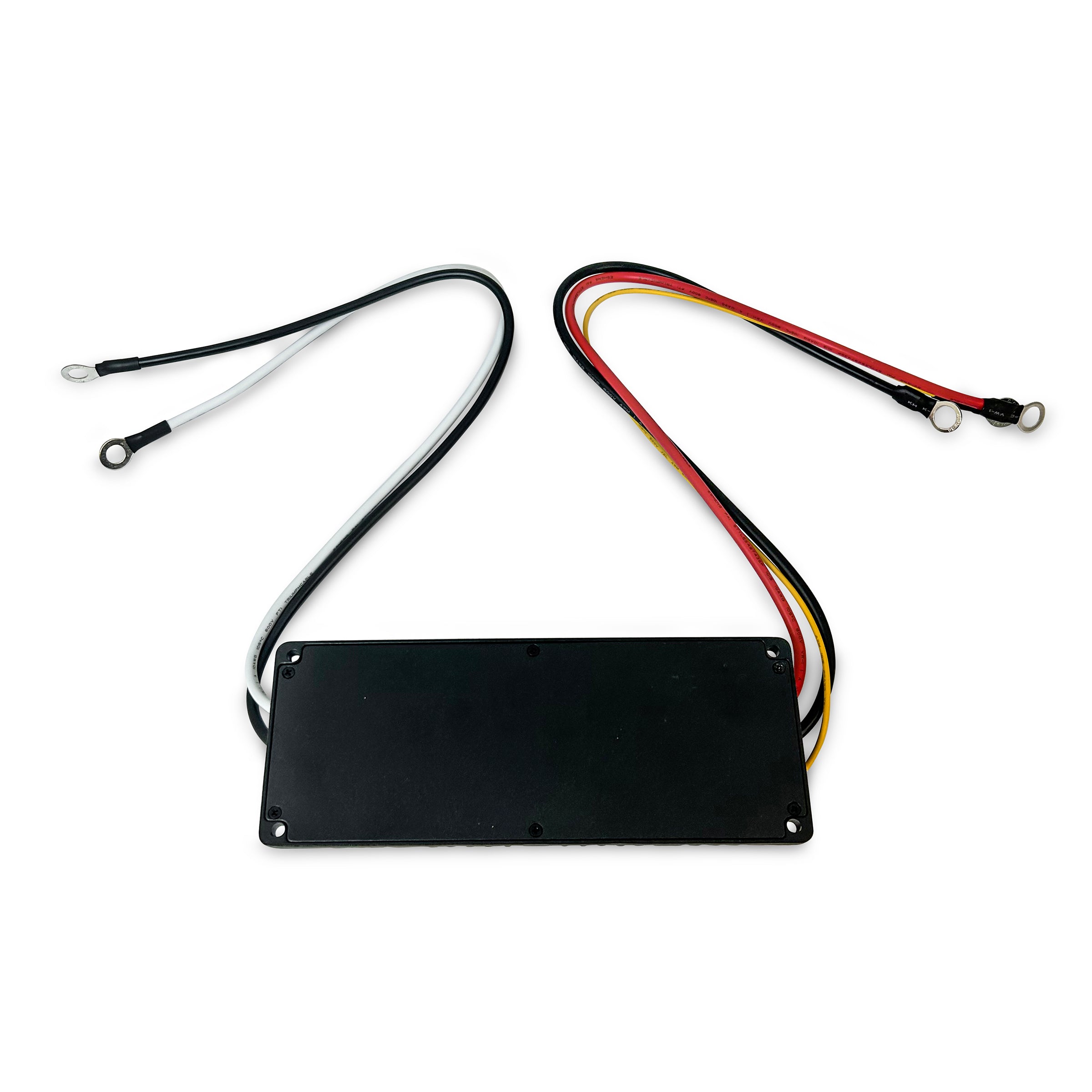
| Dimensions | 200 x 78 x 33mm |
| Weight | 1.1kg |
| Warranty | 12 Months |
Selecting the Correct Charger
Select the charger that matches your lithium battery system voltage and charging requirements. Also confirm that the source battery, alternator or charging system can support the charger's input power requirements.